📞 (818) 362-5834🚨 Emergency: (818) 822-7703

Training
Supporting You
Calendar ↗
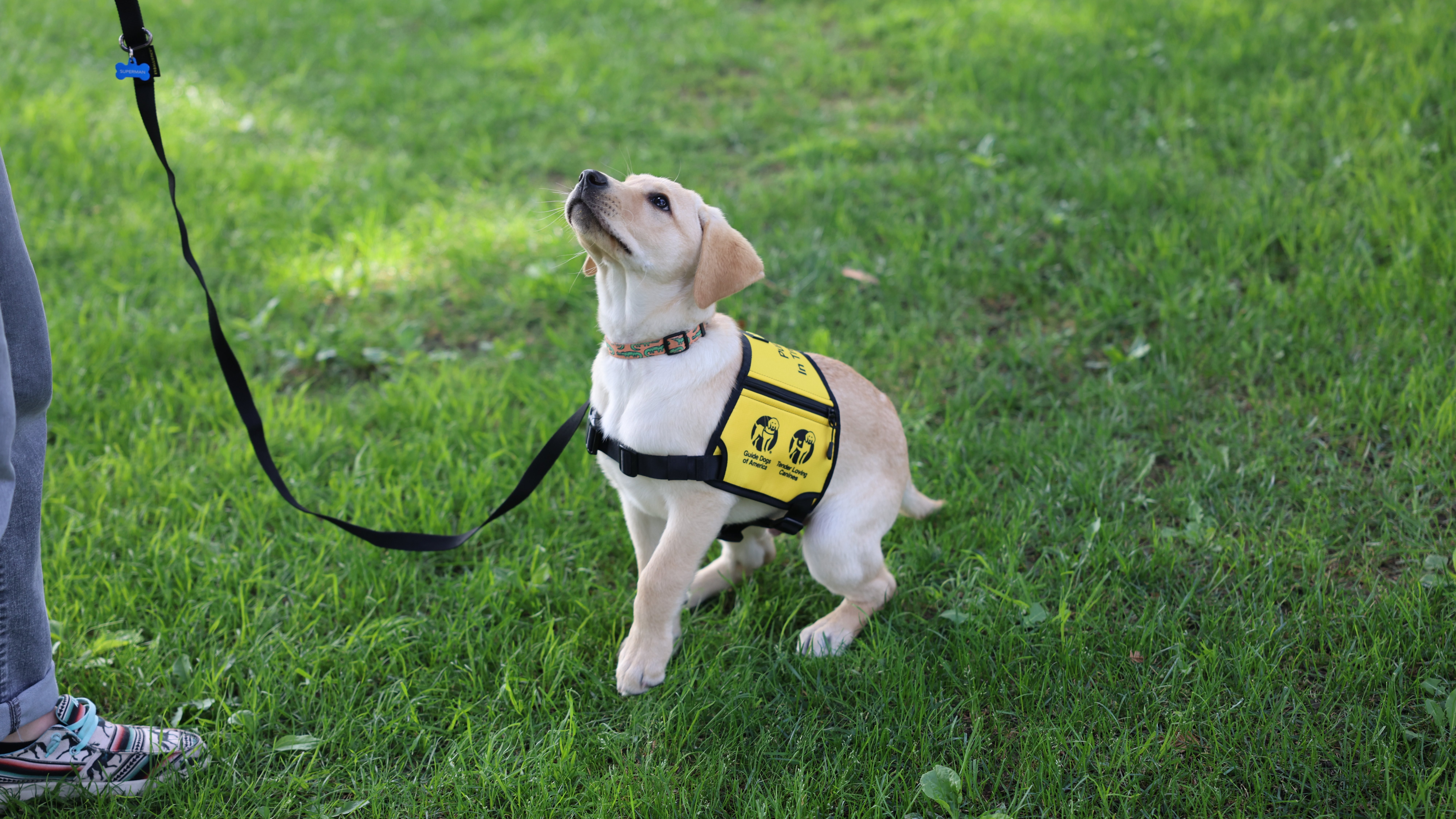
GDA | TLC puppy in training vest on grass
Volunteer Resource Portal

Supporting
Puppy Raisers

We are here for you as you embark on the wonderful journey of raising a puppy for Guide Dogs of America | Tender Loving Canines — from day one all the way to turn-in day.
75+Years of Service
14Local Areas
16–18 moPuppy Journey
100%Free to Recipients
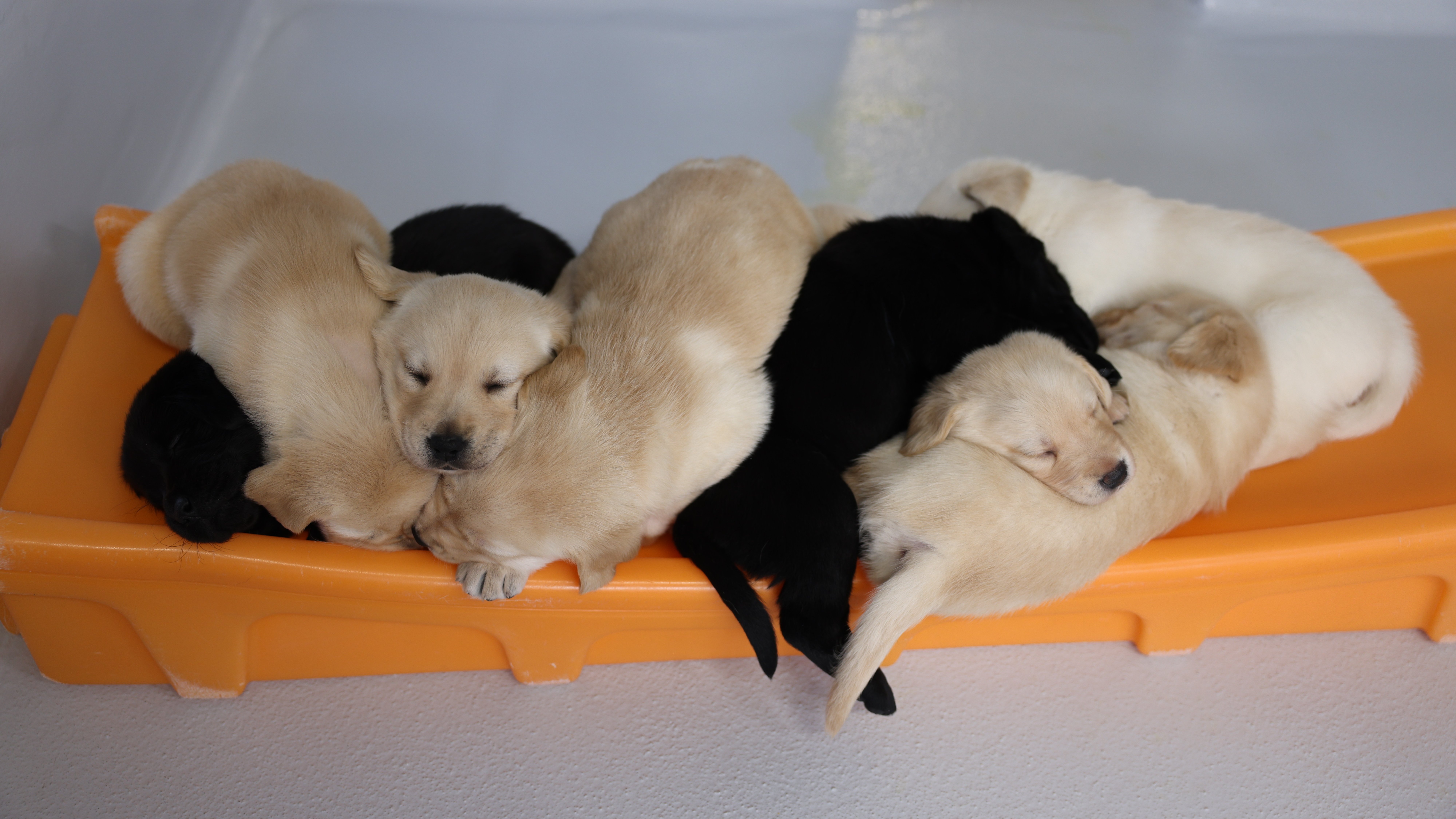
GDA | TLC newborn puppies resting together
Training Support

Supporting you with training

We are here for you from the very first day you take your puppy home, to the emotional turn-in day. Puppy Kindergarten and additional training sessions are foundational to setting the puppy up for success.

Local Support

Support Through Local Groups

Leaders and fellow puppy raisers are ready to support you in your area. Click any area to learn more.

The Process

Your Puppy Journey

From the time your puppy comes home until s/he returns to GDA | TLC for formal training.

01

The First Few Weeks

Your puppy comes home at about 8 weeks old. These first few weeks are a blur of cuteness amid middle-of-the-night jaunts to "get busy" — take lots of photos, they grow so quickly!

02

Puppy Kindergarten

Every week you'll meet with your area leader or a CD trainer to work through a carefully-crafted curriculum leading you & your puppy through basic obedience step by step.

03

Post Puppy K Assessment

4–6 weeks after Puppy K, meet with your CD trainer to evaluate progress and get specialized goals for your puppy's specific needs.

04

Socialization & Skills Practice

Practice Puppy K skills "on the road," carefully expanding your puppy's world with new environments and people over several months.

05

Outside Obedience

Enroll your puppy in an outside obedience class to hone skills around unfamiliar dogs.

06

Kennel Stays

From 6 months old, puppies can board at GDA's Sylmar facility. Begin with a day stay or 1–2 overnights before extended visits.

07

9-Month Evaluations

Around nine months, your CD team member will do one-on-one evaluations and you will receive a detailed progress report.

08

12-Month Evaluations

At around one year, meet with your CD team member nearby to observe progress and assist with real-time problem solving.

09

Advanced Skills

Your area may offer more advanced skills training — we highly recommend taking advantage when available.

10

In For Training

At 16–18 months, you and your puppy are invited back to campus to celebrate the start of guide or service dog training. If they graduate, you'll meet their new partner.

May 22, 2026

Notice of Potential Upper Respiratory Infection (URI) Exposure

🏥 Health Alert

We want to inform you of potential Upper Respiratory Infection (URI) exposures within our program. As we continue to monitor and track possible cases, we ask for your cooperation in helping us mitigate the spread.

As we continue to monitor and track possible cases, we ask for your cooperation in helping us mitigate the spread.

If your program dog may have been exposed
  • Quarantine: Keep your dog separated from other program dogs for 14 days after the last known exposure. Symptom-free dogs may still leave home for training and outings, provided they avoid contact with other program dogs.
  • Appointments: If your dog has a scheduled Veterinary, Boarding, or Breeding Department appointment, please confirm with the relevant department before arriving.
  • Events & Gatherings: If your dog may have been exposed, please refrain from attending GDA/TLC events, monthly meetings, puppy-sitting plans, or other gatherings. Canine Development and your Area Leader(s) will provide updates as more information becomes available.
  • Monitoring: Watch your dog closely for signs of illness — coughing, gagging, throat clearing, nasal discharge, lethargy, or loss of appetite. If symptoms develop, contact the Veterinary Department.
Open House Guidelines

Open house precautionary guidelines remain in effect. If you plan to attend an open house, please continue to adhere to all established guidelines.

We will continue to provide updates as more information becomes available. Thank you for your dedication to the health and well-being of our program dogs.
Questions? Contact

🏥 Veterinary Dept: VetDept@guidedogsofamerica.com  |  (818) 833-6470
🏨 Boarding: Boarding@guidedogsofamerica.org  |  (818) 833-6449
🐾 Breeding Dept: BreedingDepartment@guidedogsofamerica.org  |  (818) 833-6460

Kassandra Silcott — Lead Veterinary Assistant
krsilcott@guidedogsofamerica.org  ·  (818) 833-6470  ·  Monday–Friday 8:00 AM–4:30 PM

May 2026

Healthy Heroes Unite! — Open House Safety Precautions

🏥 Health Alert
Healthy Heroes Unite — Open House Safety Precautions

As we prepare for the GDA | TLC Open House on June 6th, we want to ensure all dogs attending arrive to a safe, healthy, and hero-worthy environment.

To help protect the health of our dogs, we are implementing a precautionary period from May 23rd – June 5th for dogs attending Open House.
Important reminders during this time
  • Skills Classes will be suspended between May 23 – June 5 to reduce exposure risks.
  • Monthly meetings may continue, without dogs please.
  • Please avoid group activities, including group walks, social gatherings, or events involving multiple dogs.
Why are we taking these precautions?
  • To support full participation at Open House on June 6, 2026
  • To help maintain a healthy environment for all program dogs
  • To reduce the risk of illness leading up to PIT eye exams, medical clearances, upcoming class & graduation
  • To ensure more wags, more hugs, and more heroic memories at Open House!
Be a Health Hero!
  • Please watch for signs of illness — including coughing, sneezing, nasal discharge, gagging, throat clearing, lethargy, fever, or changes in appetite.
  • If your dog shows any signs of illness, please avoid contact with other program dogs and contact the Veterinary Department for guidance.
The Good News
  • Outreach commitments already scheduled may continue with reasonable social distancing between dogs.
  • Puppy Kindergarten may continue as scheduled for puppies too young to attend Open House.
  • No boarding restrictions are currently in place.
Thank you for helping us keep our dogs healthy, happy, and ready for a wonderful GDA | TLC Open House!

Questions? Contact puppydept@guidedogsofamerica.org or call (818) 362-5834.

— No earlier announcements —
Official Document

Puppy Raiser Manual PDF

The Puppy Raiser Manual is your primary reference for everything related to raising a GDA | Tender Loving Canines service puppy — training guidelines, protocols, health care, and program expectations.

📅 Last updated: September 26, 2025 — Always download the latest version.
📌 ImportantTraining sessions should only be started after instructions from a Canine Development trainer or your Area Leader. Prematurely starting a module may negatively impact your puppy's success.
Quick Reference

Key Contacts

Main Number
(818) 362-5834
24-hr Emergency
(818) 822-7703
Kennel / Boarding
(818) 833-6448
🐾

GDA|TLC Puppy Manual Assistant

AI-powered · Always verify with your CD team

⚠️ AI-generated responses — always verify. This assistant uses artificial intelligence and may produce inaccurate or outdated information. Always confirm important details with your CD team member or the official before acting on any advice.
Hi! 👋 I'm the GDA|TLC Puppy Manual Assistant. I can help you find information, but please always verify important decisions with your Canine Development team or the official manual.
Just now
Go Home

Puppy Go Home Resources

Resources made available when you pick up your puppy to go home.

Classes

Puppy Kindergarten

⚠️ Prerequisite NoticeTraining sessions are guided by Canine Development trainers or Area Leaders. Do not proceed to the next class until your puppy is successful with the current one. Sessions should be short — multiple short sessions are most successful. If the puppy is not interested or having difficulty, STOP and try again later.
📋 Class 1 Homework

Practice paw pad and ground tether exercises 1–3 times daily. Slowly move the paw pad away from the wall as the puppy progresses. Ground tether distractions can be specific to your puppy. Puppies should not be run through all activities in one session — multiple SHORT sessions are most successful.

🎯 Goal: Stand with front feet on paw pad in straight heel position alongside handler 💡 Why: Foundation training for heel position

Setup

  • Quiet location. Place paw pad next to a wall on the puppy's left. Ideal: a wall opening or corner so the puppy can see to the left.
  • Paw pad must be perpendicular (short edge) to the wall.
  • Puppy must be off leash for this exercise.
  • Handler stands beside the paw pad facing forward, front edge of paw pad touching the mid-line of the left foot, feet squared and together.

Luring Puppy onto the Paw Pad

  1. Standing 1–2 feet behind paw pad, hold puppy in left arm. Load right hand with several treats, place puppy on floor, transfer treats to left hand.
  2. With treats in left hand, lure puppy forward to the paw pad and position your feet alongside.
  3. As soon as puppy places one front foot on the pad, begin "pezzing" (rapid treat delivery). Puppy's second foot will follow. Caution: If food drops, keep puppy busy eating while you pick it up — puppy must NOT get dropped food.
  4. Before running out of treats, resupply the feeding hand without moving it away from puppy.
  5. While puppy has both feet on pad, continue pezzing for 10–15 seconds.
  6. Gently pick puppy up, place about a foot behind the pad, and repeat.
  7. Do several repetitions. Keep in mind puppy's engagement and maturity.
  8. When finished, remove paw pad so puppy has no access to it.

Offering to Step on the Paw Pad (Without Lure)

  1. Review previous luring procedure once to remind puppy. Pick puppy up after review.
  2. Place puppy about a foot behind the pad. Step into position and wait — see if puppy will offer to step on. If puppy does, mark "Nice!" and reward, begin pezzing.
  3. If puppy doesn't offer, mark and reward any movement toward the pad (shaping the behavior).
  4. If puppy appears confused, practice luring again.

Moving Away from Pezzing to Direct Delivery

  1. Place puppy behind pad, wait for puppy to put 2 feet on. Hold treats in right hand for immediate mark when feet hit.
  2. While puppy chews, pull hand 3–4 inches away. If puppy remains still, mark "Nice!" and deliver a treat.
  3. Gradually increase distance between hand and puppy's nose. Slowly start to stand up.
  4. Treat delivery hand must be in front of or slightly to the left of puppy's nose. Head must NOT curl in front of handler's left leg.
  5. Continue to increase duration between marks. Right hand must be passive at your side — NOT in the bait bag.
  6. Paw pad should be moved off the wall 1–2 inches at a time so puppy doesn't become reliant on the wall.
🎯 Goal: Puppy keeps a loose leash while facing mild distractions 💡 Why: Beginning of impulse control

Setup

  • Puppy on leash. Bait bag with plenty of treats.

Get into Position

  1. Handler stands firmly on the leash with the ball of the foot. Leash should be short enough that puppy feels pressure if it moves away, but long enough that the collar is loose when puppy stands next to handler (~2 feet).
  2. Handler must stay stationary and allow puppy to test the ground tether.

Mark and Reward For

  • Not pulling on collar or leash.
  • Looking at the handler.
  • If puppy tries to pull, wait for puppy to release pressure, then immediately mark and reward. Deliver rewards close to handler's legs to help puppy feel the loose collar.
  • Area Leader places a small distraction (a few kibble or a toy) on the floor outside puppy's reach. As soon as puppy releases pressure, mark and reward. Once puppy consistently offers a loose leash, increase distractions (leaves, sticks, toilet paper, socks, high value food).
🎯 Goal: Puppy is calm and relaxed while being touched on every inch of body 💡 Why: Puppy comfortable being handled (vet visits, grooming)

Setup

  • Puppy off leash.

Procedure

  1. Sit down with puppy between your legs. Use slow long strokes to calm puppy.
  2. Start at head. Massage gums and teeth.
  3. Nose: touch it.
  4. Eyes: look at them, gently touch around them.
  5. Ears: massage, smell, place fingers in them.
  6. Massage down the neck.
  7. Front legs: hold each out at the elbow (blood draw practice). Feel and massage toes and feet while legs are stretched out.
  8. Gently roll puppy onto their side.
  9. Massage body and back.
  10. Stroke the belly.
  11. Back leg: massage one back leg, toes, and feet.
  12. Roll puppy to other side, repeat steps 13–14.
  13. Feel all the way down the tail.
  14. Calmly release the puppy to get up.
📌 PrerequisiteThere is a prerequisite assumption for puppies to advance based on their success. Some puppies may need to continue working on Class 1 material.
📋 Class 2 Homework

Practice the paw pad in short sessions, 2–3 times daily. Gradually increase distance of the stand and stay. Practice ground tethering with increased distractions using a variety of objects. Multiple SHORT sessions are most successful.

🎯 Goal: Puppy remains in standing position on paw pad while handler moves away 💡 Why: Introduces self-control and is the foundation for the Stay command

Setup

  • Puppy off leash. Paw pad placed where puppy will be successful. Bait bag full of rewards.

Procedure

  1. Have puppy stand on the paw pad. Mark and reward. As puppy chews, take one small step forward with the right leg. Slightly pivot on the left leg and immediately return. Mark and reward. Movement must be very small initially.
  2. Repeat gradually increasing distance. Keep the left leg next to the paw pad and pivot on it — less distracting to the puppy. High rate of reinforcement as handler moves in and out of position.
  3. Next, pivot in front of the puppy, marking and rewarding before stepping back. Repeat several times.
  4. Once solid, handler may take a step backward while facing puppy. Mark, return to front, deliver reward. Do not rush increasing distance.
  5. Gradually increase time between rewards. If puppy becomes restless, the position is being held too long.
  6. Once holding position, handler can step forward, sideways or backward. Gradually increase number of steps over several sessions.
  7. Once handler is certain puppy will stay, add the verbal cue "Stay" and hand cue as handler steps away. Cues are added AFTER the behavior begins to take shape.
🎯 Goal: Loose leash and collar around more enticing distractions while focused on handler 💡 Why: Continued impulse control practice

Procedure

Same setup and positioning as Class 1 ground tether. Area Leader or assistant places a variety of enticing distractions (people, food, sticks, leaves, balls) on the floor outside puppy's reach. As distraction level increases, maintain the mark-and-reward system for loose leash. Progress to higher-value distractions only when puppy consistently demonstrates a loose leash.

Continue the full body handling routine from Class 1. Consistent repetition across sessions builds the puppy's comfort with all types of physical touch. See Class 1 for full procedure.

📌 PrerequisiteThe same prerequisite continues — advance only when individual puppies are successful. Some puppies may need to work on the previous class's material.
📋 Class 3 Homework

Work on paw pad impulse control, changing the distraction after many successes with food. Practice foundational sit, ground tether, stand/stay on paw pad and body handling. Multiple SHORT sessions. Next class: bring a nonskid surface such as a yoga mat, bath mat, or towel.

🎯 Goal: Remain in heel position on paw pad when distraction is offered 💡 Why: Continued impulse control

Setup

  • Assistant wearing a bait bag with same rewards as handler. Puppy off leash. Paw pad.

Caution

If puppy comes off the paw pad to get distraction, WAIT for puppy to choose to step back on. If too distracted, pick puppy up and reset behind the pad. If puppy continues to come off, return to previous session and work on standing duration.

Procedure

  1. Handler marks and rewards puppy for standing on paw pad for 10–12 seconds between marks.
  2. While puppy is being rewarded, assistant approaches 2–3 feet away with food still in bait bag.
  3. Handler keeps rewarding. While puppy chews, assistant slowly squats down. Rate of reinforcement must increase. If puppy moves off pad, assistant stands up and ignores puppy. Handler picks puppy up and resets.
  4. While puppy is being rewarded, assistant gets food out of bait bag. Handler marks and rewards rapidly while puppy watches the food being removed (very distracting). Assistant closes hand over food after marker word is said.
  5. Once assistant has food in open hand, handler marks and rewards puppy for not leaving the pad. Allow puppy to chew before assistant opens hand again.
  6. Slowly increase duration between marks and rewards.
  7. After practice, give puppy a mental/get busy break before continuing.
  8. Continue with assistant placing food on floor. Be prepared to cover food if puppy tries to get it.
  9. If successful ignoring food for 5–6 seconds, assistant can pick up kibble and drop it from 2–3 inches above floor. Gradually increase drop height as puppy succeeds.
  10. Once puppy ignores food dropped 2–3 feet away, handler can start dropping kibble in front of pup (as if accidentally dropped). Rapidly mark and reward for staying on pad.
🎯 Goal: Puppy tucks back feet forward into sit while front feet remain stationary 💡 Why: Puppy can remain in heel position while changing from stand to sit

Setup

  • No paw pad. Quiet room without distractions.

Procedure

  1. Allow puppy to perform the sit in front of the raiser sideways for ease of positioning.
  2. Gain puppy's attention with food in hand. Multiple pieces stashed for pezzing in sit position.
  3. A standing puppy will move forward into sit if the lure is slowly moved forward and slightly above the puppy's head. Food must be on the puppy's nose so puppy can follow.
  4. It's okay initially for the puppy to take several steps forward before sitting. Feed the whole time puppy is moving into position.
  5. Once in sit position, deliver several treats.
  6. Have puppy break from sit. If puppy won't move, lure forward a few steps before restarting.
  7. Once puppy easily moves into sit, transition to a hand signal (right hand, palm up, moving upward). If using hand signal without food, use marker word "Nice!"
  8. Once responding to hand signal, slowly move it toward a more natural position away from puppy's nose.

Continue the full body handling routine from Class 1. Consistent repetition builds comfort with all types of physical touch. See Class 1 for full procedure.

⏱️ NoteThere are many topics in this class. Avoid exceeding 1½ hours of class time. Allow time between sessions for puppies to have mental and busy breaks.
📋 Class 4 Homework

Practice, Practice, Practice!

🎯 Goal: With front feet on paw pad, puppy moves from stand to sit and sit to stand. Verbal cues "sit" and "stand" introduced.

Setup

  • Quiet location with limited distractions. Puppy off leash. A nonskid surface. Several treats. Paw pad.

Procedure

  1. Review standing on the paw pad as done in previous weeks.
  2. With puppy in heel position standing on pad, lure into sit. Hold kibble under your thumb with palm flat. Slowly raise hand up and slightly forward away from puppy's nose. Puppy should naturally follow and bring back feet forward into sit. Release treat when puppy sits.
  3. Once in sit position, rapidly reward for 10 seconds. If puppy breaks the sit, stop rewards.
  4. After 10 seconds, stop rewards and wait for puppy to offer a stand. If puppy doesn't stand, lure into stand.
  5. Work on lengthening duration in sit by increasing time between rewards.

Introducing Stand Hand Cue

  1. Use right hand in vertical position with fingers pointing to puppy's left, kibble in palm secured with thumb.
  2. Slowly move hand 2 inches forward, encouraging puppy to stand. Front feet must remain on pad while back feet move into stand.
  3. Replace lure with verbal cue "stand" before giving the hand cue.
🎯 Goal: Puppy learns the down position by moving front feet forward 💡 Why: Foundation for the down command in heel position

Setup

  • Paw pad will NOT be used for introduction to down. A non-skid surface. Puppy off leash. Bait bag with several treats.

Procedure

  1. Puppy may be in front of handler sideways for ease. Handler may need to kneel or crouch.
  2. With puppy in sit position and multiple pieces of kibble in hand, get puppy's attention. Lure must be kept on puppy's nose.
  3. Slowly move hand in a straight line to the floor. As puppy lowers body, reward. (If lure is too far in front, puppy will stand. If moved too fast, puppy can't follow.)
  4. Once in down position, give many treats in rapid succession.
  5. After 10 seconds, lure back up into sit. Repeat.
  6. Once multiple successes from sit position, lure into down from a stand as well.
  7. Introduce the down hand cue (right hand, flat palm facing down in a downward motion) after several successful sessions. Kibble can be tucked under thumb for initial hand signals.
🎯 Goal: Puppy ignores distractions by keeping a loose leash and engaging with the handler 💡 Why: Impulse control held by hand rather than foot

Setup

  • Quiet controlled environment. Suitable distractions. Puppy on leash.

Procedure

  1. Handler stands holding leash. Leash should be short enough for puppy to feel pressure if it moves away, but long enough that collar is loose when puppy stands next to handler (~2 feet). Position is not important.
  2. Tether leash to left leg, level with puppy's neck. If small puppy, bend over.
  3. Mark and reward: puppy stops pulling (increase duration); puppy notices distraction but chooses not to pull; puppy looks at handler when distraction is present.
  4. Deliver rewards close to handler's leg to help puppy feel loose collar.
  5. If puppy tries to pull, wait for release, then immediately mark and reward. Once puppy is consistently choosing loose collar, mark only a fully loose leash.
  6. Area Leader places small distraction on floor outside puppy's reach. Mark and reward for loose leash. Once consistent, increase distraction level.

Continue the full body handling routine from Class 1. See Class 1 for full procedure.

📋 Class 5 Homework

Work on the paw pad outside of home, such as in your driveway or on the sidewalk. Start with low distraction and slowly increase as the puppy succeeds. Windy days and areas with lots of people and dogs are huge distractions! Keep sessions short and successful. Work on hand tethering in motion in and outside of your home.

Next Class Note: Class 6 takes place at an outdoor location with real-life distractions (park or similar). Everything from the past 5 weeks has been building a solid foundation. Bring the paw pad and lots of high-value treats (e.g., Zukes) as well as low-value treats (regular kibble).

🎯 Goal: Fluid transitions between down, sit, and stand — all while maintaining front feet on the paw pad

Now that all three positions have been introduced, the focus is on smooth, reliable transitions between them while the puppy's front feet remain on the pad. Continue to use lures initially, then phase them out as the puppy becomes fluent. Build duration in each position before moving to the next.

🎯 Goal: Puppy waits calmly on the paw pad during any brief stop or pause in activity

This exercise reinforces that the paw pad means "be calm and focused here." The puppy should remain on the pad regardless of what is happening around them, with no command needed — just the presence of the pad signals the expected behavior.

🎯 Goal: Puppy maintains position reliably and responds to verbal "Stay"

By this stage, the puppy has been practicing staying on the paw pad while the handler moves. Now the verbal cue "Stay" is formally introduced: say the cue while stepping away, return before the puppy moves, and mark and reward. Build distance and duration gradually over multiple sessions. Combine with the hand signal (flat palm toward puppy) for a complete cue package.

🎯 Goal: Puppy responds to verbal cues "down," "sit," and "stand" without hand lure

The verbal cues are introduced now that the puppy has a strong history of responding to hand signals. Say the verbal cue just before giving the familiar hand signal. Over time, the hand signal can be faded so the puppy responds to the word alone.

🎯 Goal: Puppy maintains loose leash while handler is in motion

Build on the stationary hand tethering from Class 4. Now the handler begins to walk slowly while maintaining the tether. The puppy should learn to match the handler's pace without pulling. Start with simple forward movement, then add direction changes. Mark and reward loose leash throughout.

📍 Outdoor ClassClass 6 is held in a real-world outdoor location (park or similar). This is the graduation class that prepares raisers and puppies for regular area meetings with older dogs. Behavior starts the moment the puppy gets out of the car.
🎯 Goal: Puppy demonstrates impulse control in real-world community settings 💡 Why: Prepares raiser for regular meetings and community outings

Prerequisites

  • Puppy must have completed the first 5 weeks of Puppy K.
  • Puppy demonstrates understanding of all behaviors taught in class.
  • Handler must be confident and understand all protocols.

Procedure

  1. Place paw pad close to the car before removing the puppy.
  2. Get puppy out of car and immediately walk puppy into position on the paw pad.
  3. Mark and reward for standing calmly on the paw pad.
  4. After several marks for calm behavior, cue puppy into other positions (sit, down). This sets the tone for a calm, focused puppy.
  5. When successful near the car, pick up the paw pad and move closer to distractions. Keep in mind — success is key and short distances are crucial.
  6. Mark and reward for calm behavior, then cue for other positions.
  7. If puppy cannot remain calm, retreat to where the last successes were achieved and repeat.
  8. If successful, continue moving short distances closer to distractions.
  9. If puppy cannot remain calm and focused, the session should end and the puppy should go home to work on impulse control with less distraction.
  10. Some puppies may not leave the parking lot — that is okay! Accept the puppy's successes and limitations.
  11. Raisers may need to spend the next month working on approaching all the distractions that occur at a meeting before getting into the actual meeting. The puppy must be calm and focused at all meetings.
  12. The puppy must be successful! There is no point in pushing beyond the puppy's limits. If the handler becomes frustrated or embarrassed, the puppy will feed off it. The raiser must remain calm.
Advanced

Post Puppy K

These training topics expand your puppy's skills after Puppy K. Start only when directed by your Area Leader or at a Skills class.

📢 Schedule ChangesIf a last-minute change is needed, updates will be posted in the private Facebook GDA/TLC Puppy Raiser Group. Area Leaders will also be notified. Questions? Email puppydept@guidedogsofamerica.org.
Tuesday

GDA Sylmar Campus

6:30 pm – 7:30 pm
Meet in the VEC parking lot
Wednesday

Ventura / Camarillo

6:00 pm – 7:00 pm
Meet behind the building

Long Beach — Lowe's

6:00 pm – 7:00 pm
Lowe's parking lot — meet on the garden center side
Thursday

Simi Valley — Lemon Park

6:30 pm – 7:30 pm
Meet in the parking lot closest to the Boys & Girls Club / basketball courts. No class on the 4th Thursday of the month.

La Cañada Flintridge

10:00 am – 11:00 am
Meet at bus stop in front of Target near the park
Friday

Torrance

11:00 am – 12:00 pm
Meet in the small parking lot near the trains

Temecula — Harveston Lake Park

4:30 pm – 5:30 pm
Meet near the Lakehouse Rd entrance of the parking lot. Not every Friday — check the Temecula Facebook group for dates.
Saturday

San Diego — IAMAW Lodge

2:00 pm – 3:00 pm  |  Monthly Meeting: 1:30 pm – 2:00 pm
Gate opens at 1:30 pm. Skills class dates posted in the SD Facebook group. Monthly meeting Saturdays 1:30–2:00 pm.

Close

Tells the dog to sit between the handler's legs facing the same direction. Hand signal is a half-circle motion from knee to knee. For long stationary periods, follow with "down."

Come

Dog comes from wherever they are to be within easy reach, facing the handler. Straight orientation to the handler is desired. Toe-to-toe contact when standing.

Down

Pup lies belly to ground, elbows on floor. Hind legs may be tucked, spread, or to the side. Lying on back or rolling around are not desired responses.

Drop

Tells the dog to drop whatever he has in his mouth.

Get Busy

Tells the pup to urinate and/or defecate in the designated area while on leash.

Get Dressed

Tells the pup to put his head through the vest.

Go to Bed

Tells the pup to go to a designated target place. Can be used when near the target or from a distance.

Heel

Dog returns to handler's left side, shoulders aligned with the handler's left leg, facing the same direction from nose to tail.

Jump On

All four paws leave the ground and get onto another surface — e.g. grooming table, short wall, vehicle footwell.

Kennel

Tells the dog to go to and get into her crate. May be used from near the crate, from a distance, or from other rooms.

Let's Go

Clear, upbeat tone before you start moving. Gives the dog time to process — signals that you and your dog are about to start moving together.

Nice

Our marker word — precisely marks a specific desired behavior. Always follow a mark with a reward.

OK

The release word — tells the dog he is done and free to move. Always end a specific request with a formal release, spoken with a clear happy tone.

Sit

Pup places rump on the ground; front paws are also on the ground.

Stand

Pup stands with all four paws on the ground and remains still without moving.

Stay

The pup remains in a specific position in a specific place while the handler moves away. Handler may return to the dog or call the dog from the stay.

Wait

Informal "stay" for brief holds — before exiting the kennel or car, waiting for a food bowl, or going through a doorway. Released with "OK" or "Let's Go."

Name Recognition

Calling your pup's name means you want their attention. Be specific — "Bradley!" is not the same as "Bradley, sit!" Use the name to prepare for action: "Bradley, let's go!"

Health & Care

Health Reference Handouts

📊

Purina Fecal Scoring Chart

Visual guide for assessing your puppy's stool health.

⬇ Download PDF
⚖️

Purina Body Condition System

Scoring guide for assessing your puppy's healthy weight throughout development.

⬇ Download PDF
🩺

Vet Department Questionnaire

Required if you'd like your puppy seen by the GDA Vet Department during a kennel stay.

⬇ Download PDF
💊

Vet Reimbursement Form

For approved outside veterinary expenses. Pre-approval required before seeking reimbursement.

⬇ Download PDF
📖

Puppy Raiser Manual

The complete program guide (Sep 26, 2025).

Quick Reference

At-a-Glance

📞

Important Phone Numbers

🕐

Kennel Hours

10:00 am – 7:00 pm
7 days a week

Closed on holidays. Reservations required.

📅

Monthly Report Schedule

  • 📬 Link emailed on the 29th each month
  • 📝 Report due on the 1st each month
  • 🔔 Reminder sent on the 3rd if incomplete
  • 🔒 Link is unique — do not share
Canine Development

Your CD team are your primary contacts throughout the puppy raising journey. They maintain records for each puppy and can guide you at every stage.
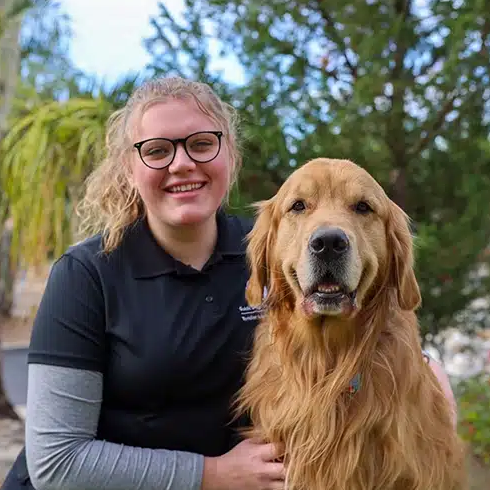
Abigail Gertson-Garcia

Abigail Gertson-Garcia

Canine Development Assistant

Canine Development
Victoria Tonge

Victoria Tonge

Canine Development Assistant

Canine Development
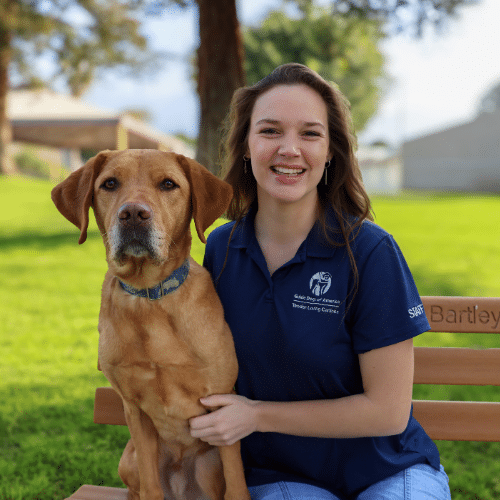
Sierra Booker

Sierra Booker

Canine Development Assistant

Canine Development
Recruitment & Outreach
Katherine R. Juhl

Katherine R. Juhl

Sr. Manager, Puppy Programs

Recruitment & Outreach
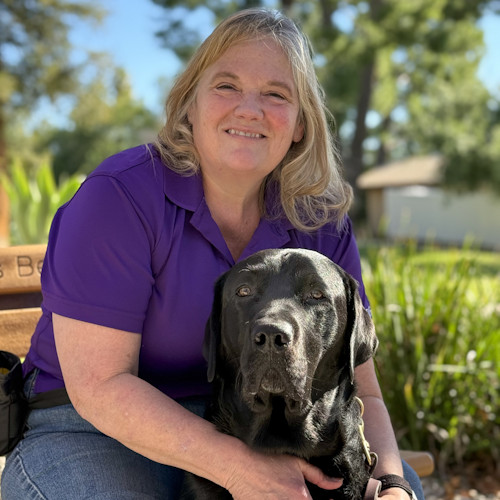
Cathy Witucki

Cathy Witucki

Puppy Programs Manager

Recruitment & Outreach
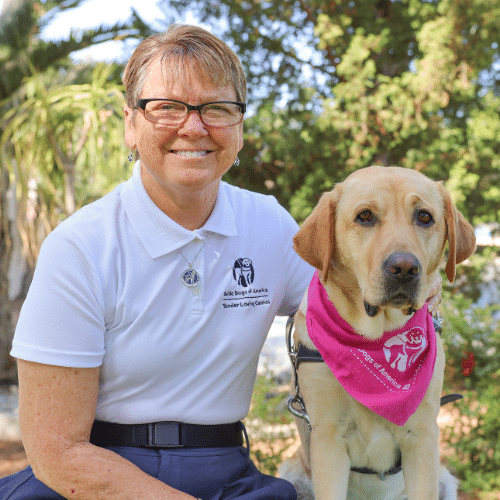
Teresa Blevins & Delilah

Teresa Blevins & Delilah

Outreach & Development Associate

Recruitment & Outreach
📬 How to Reach Your TeamContact your local CD team member directly. Don't hesitate — that is what they are here for!

📞 (818) 362-5834  |  ✉️ puppydept@guidedogsofamerica.org
About AreasEach area has a volunteer leader who coordinates monthly meetings — a great opportunity to meet fellow raisers and get support. Participation in monthly outings and meetings is important. When choosing an area, consider the location and timing of the monthly meeting.
Southern California Groups

GDA | TLC Puppy Raiser Areas

Click any area below for full meeting details and contact information.

Area Group Meeting Locations

Interactive map of all 14 area group meeting locations across Southern California. Click any pin for group details.

⚠️ Do Not Start Without DirectionThese training topics expand your puppy's skills after Puppy K. They must be directed by your Area Leader or introduced at a Skills class. Do not begin any topic here without that guidance — starting too early can negatively affect your puppy's progress.
4 Topics

Post Puppy K Training Topics

Tap any topic below to expand the full instructions.

🎯 Goal: Puppy moves between your legs and sits or lies down facing the same direction as you 💡 Keeps puppy safely positioned in tight spaces; teaches them to tuck under a chair or between your legs

Setup

  • Choose a secure, low-distraction area.
  • Use a chair with open space underneath. Chairs with rungs can make sitting or lying down harder.

How to Teach

  1. Sit on the edge of the chair with your legs open in a V shape.
  2. Position your puppy in front of you, facing you. If entering from the left, start slightly in front of your left leg. If entering from the right, start slightly in front of your right leg.
  3. Place a treat at your puppy's nose.
  4. Slowly lure from one knee to the other, tracing a U shape following the outline of your legs from knee to knee. Do not use your free hand to push or guide the puppy's rear into position.
  5. As your puppy's rear moves between your legs, lift the treat upward slightly to guide them into a sit. If you want a down, once the puppy is sitting, cue "down."
  6. Your puppy should end between your legs, facing forward in the same direction as you.
  7. Reward several times while your puppy remains in position.
  8. Release with "Okay."
🎯 Goal: When you say "Come," your puppy will come to you reliably and willingly in all situations 💡 Strengthens safety in dangerous situations and builds handler confidence

Reminders

  • Teach this cue after the puppy is fluent in name recognition.
  • This cue is used only for recall — not for loose-leash walking. Use "Let's Go" for walking.
  • Reward every time the puppy completes the cue successfully, even once fluent.
  • If the puppy fails to respond, gently guide by the leash. Do NOT pull.
  • Do not repeat "Come" if the puppy fails to respond.
  • Do not combine "Stay" and "Come" until the puppy is fluent in both separately.

Equipment

  • Kibble / treats
  • Regular leash
  • Long line leash

Exercise 1 — Using a Food Lure

  1. Begin with your puppy on leash (regular or long line).
  2. Load 3 pieces of kibble into your hand.
  3. Show the puppy the food and slowly take a few steps backwards. As the puppy follows, say "(Puppy's Name), come." You will be facing the puppy when you call.
  4. When the puppy runs toward you, use the food to lure them between your knees. Offer all 3 pieces one at a time.
  5. Break off with "okay." Walk to the end of the leash and repeat.

Exercise 2 — Without a Food Lure

  1. Begin with your puppy on leash. Allow the puppy to wander and attention to drift.
  2. Say the puppy's name and give the cue "come" in a happy tone.
  3. As the puppy moves toward you, take a few steps back while verbally praising. Reward with food between your knees.
  4. If the pup does not respond immediately, lure with food close to their nose. As the puppy begins to move toward you, step backwards while praising.
  5. Break off with "okay" and repeat.

Exercise 3 — Long Line / Two Handlers

  1. Begin with your puppy on a long line.
  2. Handler A holds the puppy by gently placing hands on the chest (not the collar), facing the puppy toward Handler B. Handler A remains neutral. Handler B holds the leash.
  3. Handler B calls "Come." When the puppy arrives, Handler B praises and rewards. The leash is quietly handed back to Handler A.
  4. Handler B becomes calm and uninteresting. Handler A calls the puppy. Repeat.
  5. As puppy progresses, add outside distractions and remove the directional setup.
🎯 Goal: When you say "Drop," your puppy releases the item right away 💡 Prevents keep-away behavior and keeps puppies safe from harmful items

How to Teach

  1. Get ready — Put your puppy on a leash. Have kibble or treats and a toy your puppy likes.
  2. Start with easy items — Use toys or objects your puppy is already willing to give up.
  3. Trade the item — Let your puppy take the toy. Hold a piece of kibble near their nose. When they drop the toy, give them the kibble right away.
  4. Repeat — Practice the "trade" game often with different toys so your puppy learns that letting go is a good thing.
  5. Add the word "Drop" — Once your puppy is dropping easily, say "drop" right before you show the kibble.
  6. Reward after the drop — As your puppy improves, wait until they drop the item before presenting the treat.
  7. Practice off-leash — Try in a safe, enclosed area. If your puppy begins playing "keep away," return to on-leash practice. If keep-away continues, contact Canine Development.
  8. Use on outings — Once the puppy understands the cue, use "drop" for things they shouldn't have (sticks, socks, trash).
  9. Practice during play — Use "drop" while playing fetch to build the habit.
  10. Progress check — Say "drop" once. If needed, repeat once. If no response, return to easier steps.
🎯 Goal: When you say "Heel," your puppy steps into position at your left side right away 💡 Prepares the dog for their future career; reinforces impulse control and loose-leash walking

Ideal Position

At the handler's left side, dog's shoulders aligned with the handler's left leg, facing the same direction as the handler from nose to tail.

How to Teach

  1. Get ready — Puppy can be on or off leash in a secure, low-distraction area. Have kibble or treats ready.
  2. Start with a lure — Place food in front of your puppy's nose and lure them into the ideal heel position at your left side.
  3. Add movement — Turn your body to face a different direction. Once in your new direction, lure your puppy into heel position again. Repeat until the puppy starts to offer the behavior.
  4. Phase out the lure — Allow the puppy to offer the position and mark with "Nice!" if they move into position. You can offer a leg pat on your outer left thigh as a helper cue.
  5. Continue marking — Repeat with marking the puppy moving into the correct position while you continue to turn or pivot.
  6. Introduce the verbal cue — When your puppy consistently moves into position without the lure, begin saying "Heel" as the puppy is moving into position. Mark and reward.
  7. Troubleshooting — If the puppy is slightly crooked, mark and reward a few times to shape the behavior, then lure them into the correct position and feed them there.
  8. Progress check — Say "heel" once. If needed, repeat once. If no response, return to easier steps.
📋 Homework ReminderPractice each Post Puppy K topic in short sessions — multiple short sessions per day are more effective than one long session. Only move to the next topic when your puppy is reliably succeeding. Check in with your Area Leader or CD trainer regularly to ensure you're on the right track.
📌 Why This Matters GDA | TLC tracks the health and safety of every program dog. Notify us any time your puppy stays with a sitter — even for a few hours.
🐾 Remind Your Sitter After watching your puppy, your sitter must complete a on the Forms page.

Puppy Sitter Arrangements Form


Abigail Gertson-Garcia
"Happiness is a warm puppy!" — Charles Schulz

Abigail Gertson-Garcia

Canine Development Assistant

Canine Development

Biography

My name is Abigail Gertson-Garcia. I was a puppy raiser and area leader for Guide Dogs for the Blind in Utah and raised 3 puppies who all graduated as working service dogs. After studying social work at Utah State University, I became a Registered Behavior Technician. I primarily worked with kids with autism, helping them and their families develop and implement behavior modification plans. Later I worked at various boarding and training kennels for people's personal dogs. I then began working at GDA|TLC as a Canine Development Assistant.

Availability

Typical Hours

  • Tuesday through Saturday
  • 8:00 am to 4:30 pm
  • Off Sunday and Monday

Communication

  • Email is best — allow a few days for response
  • No texting available
  • Phone for urgent matters only — leave a detailed message

Supporting Puppy Raiser Areas

Long BeachSan Fernando ValleyTorranceWest LA
Victoria Tonge
"Outside of a dog, a book is a man's best friend. Inside of a dog, it's too dark to read." — Groucho Marx

Contact

💬Text only: (818) 806-8576

Victoria Tonge

Canine Development Assistant

Canine Development

Biography

My name is Vikki and my love for animals started as a young child growing up in Buffalo, NY. I attended youth programs focused on farm animal husbandry, as well as caring for multiple animals in my household. I started training dogs in the early/mid 2000's during college in Chicago, IL, where I worked for several "training forward" pet care companies.

After a short hiatus and move to Los Angeles, I started training dogs once again. I also volunteered in multiple shelters located in Las Vegas and Los Angeles, helping train the dogs in their care. I have over 5+ years of dog training experience and currently hold a CPDT-KA certification.

Availability

Typical Hours

  • Tuesday through Saturday
  • 8:00 am to 4:30 pm
  • Off Sunday and Monday

Communication

  • Email is best — allow a few days for response
  • Text short messages to (818) 806-8576
  • Phone for urgent matters only — leave a detailed message

Supporting Puppy Raiser Areas

Inland EmpireSan DiegoSimi ValleyTemeculaVentura
Sierra Booker
"Your energy travels down the leash before your command ever does." — Unknown

Sierra Booker

Canine Development Assistant

Canine Development

Biography

I've been passionate about puppy raising since 2016, when I began my journey as a puppy raiser for Guide Dogs for the Blind. Over the years, I've had the privilege of raising seven puppies — six of whom graduated as service dogs. My career-change lab, Goodwin, came home to be my forever pet.

In college I served as an area leader for my region. As an area leader, I discovered how much I enjoy mentoring and supporting fellow puppy raisers. That experience inspired me to pursue a career in the service dog field. I earned my degree in Animal Science with a minor in Agricultural Economics from Texas A&M University, where I focused my studies on animal behavior.

After graduation, I moved from Texas to California to join GDA|TLC as a Canine Development Assistant. I'm excited to continue following my passion while contributing to GDA|TLC's mission of enhancing lives through service dogs.

Availability

Typical Hours

  • Tuesday through Saturday
  • 8:00 am to 4:30 pm
  • Off Sunday and Monday

Communication

  • Email is best — allow a few days for response
  • No texting available
  • Phone for urgent matters only — leave a detailed message

Supporting Puppy Raiser Areas

GlendoraHuntington BeachOrange CountyPasadenaSanta Clarita Valley

Katherine R. Juhl

Sr. Manager, Puppy Programs

Recruitment & Outreach

Biography

I have always had a passion for animals; whether it was dogs, horses, snakes, or birds — I was fascinated with them all! My love for animals led me to raise guide dog puppies with Guide Dogs for the Blind throughout high school and college. During that time, I raised six puppies — four becoming guides and one becoming a breeder.

After graduating from Texas Tech University with my Bachelor of Science in Animal Science, I worked at a summer camp and retreat center as their Day Camp Director and Program Specialist, where I found my love for connecting others to the outdoors. I am also currently in the process of getting my American Sign Language Level 1 Interpreting certification. I am motivated and energized at the opportunity to assist in GDA | TLC's extraordinary mission.

Role

As the Senior Puppy Program Manager, my role focuses on the recruitment and retention of puppy raisers, ensuring that our community continues to thrive and grow. I'm dedicated to finding new ways to enhance and support the puppy raising experience. This includes onboarding new raisers, guiding them through their initial steps, and coordinating the much-anticipated "puppy go home" day. My goal is to foster a strong, engaged community that feels supported every step of the way.

Availability

Typical Hours

  • Tuesday through Saturday
  • 8:00 am to 4:30 pm
  • Off Sunday and Monday

Communication

  • Email is best — aim to respond within a few days
  • Call direct line for quicker response — leave a detailed message if missed
Cathy Witucki
"You cannot get through a single day without having an impact on the world around you. What you do makes a difference, and you have to decide what kind of difference you want to make." — Jane Goodall

Cathy Witucki

Puppy Programs Manager

Recruitment & Outreach

Biography

As a child, I spent hours up in a tree with a notepad, pretending to be Jane Goodall, captivated by nature. In high school, volunteering with the Special Olympics sparked my passion for working with special populations, which led me to earn a degree in Music Therapy. After years of working with diverse populations, I left to raise a family and rediscovered my love for animals while sharing the wonders of nature with my children.

Nearly 20 years ago, I visited Guide Dogs of America with my children on a homeschool tour and left, knowing in my heart that I would one day return to raise a puppy. That dream became a reality in 2021 when I brought home my first puppy in training. As I've grown more involved in the program, Jane Goodall's words often echo within me: "This is where I belong. This is what I came into this world to do."

Role

As Puppy Program Manager, my mission is to support and guide our puppy raisers through every step of their journey — from deciding to raise a puppy to the moment that puppy is placed in their arms. My goal is to ensure every raiser feels supported, connected, and empowered as they nurture puppies who will make a lasting impact.

Availability

Typical Hours

  • Tuesday through Saturday
  • 8:00 am to 5:00 pm
  • Off Sunday and Monday

Communication

  • Email or voicemail — checked on days off for urgent matters
  • Non-urgent matters addressed when back in office
Teresa Blevins and Delilah
"My very life is in the harness and eyes of a guide and my guide's life is in mine. As a working team in harmony, taking on life's obstacle course, fully reliant on each other. My guide is my extension to the world, my safety and my companion."

Teresa Blevins & Delilah

Outreach & Development Associate

Recruitment & Outreach

Biography

Due to my sight loss, I am a retired International Association of Machinists Union member — the very union that founded GDA | TLC in 1948. I earned an associate degree in Business Management and was employed on the Fort Novosel, AL (formerly Fort Rucker) military contract as an HR liaison and Airfield Confidential Executive Secretary.

I held many positions within my IAM Local and District: District Communicator with 18 Locals where I designed websites; Women's Committee Chairwoman; Legislative Chairwoman; and many other positions.

I lost sight in both eyes without warning overnight due to Diabetic Retinopathy. Having worked as a GDA | TLC volunteer for 10 years as an organizer of fundraising events before losing my sight — and never having seen a GDA | TLC guide team in person — I never thought I would be a recipient. I was the recipient of the GDA | TLC Gift of Sight Award in 2017. I feel that I have the ultimate "Gift of Sight" through 4 paws: my guide dog Delilah.

Role

I am excited to be working at GDA | TLC as the Puppy Department Outreach Development Associate, where I bring real life experience to help people understand the importance of Puppy Raising.

Availability

Typical Hours

  • Monday & Tuesday: 8:00 am – 4:30 pm
  • Thursday: 8:00 am – 12:00 pm
  • Off Wednesday and Friday

Communication

  • Email or phone — hours may shift due to travel and events
🕐 Kennel Hours Open 10:00 am – 7:00 pm, seven days a week (closed holidays). Call (818) 833-6448 with questions.

BOARDING REQUEST FORM


| Resume a previously saved form
Resume Later

Enter your email and choose a password to resume later.

Puppy Sitting Report


How did the puppy interact with the animals they encountered in your home or while with you?
PlayedChasedFixatedBarked atIgnoredN/A


Does the puppy understand the following commands?
Does all the timeDoes most of the timeDoes half the timeDoes occasionallyWill not doN/A
Was the behavior the puppy displayed age appropriate?
Strongly agreeAgreeNeither agree nor disagreeDisagreeStrongly disagree


Main Number: (818) 362-5834
24-hour Emergency: (818) 822-7703
Kennel / Boarding: (818) 833-6448
Email: puppydept@guidedogsofamerica.org

Call the 24-hour emergency line at (818) 822-7703 immediately. If needed, take your puppy to the nearest emergency vet clinic. Document all symptoms. Outside vet care requires pre-approval for reimbursement — contact Canine Development as soon as possible.

Contact your Canine Development team member immediately at (818) 362-5834 or puppydept@guidedogsofamerica.org. Your CD trainer will give you specific guidance for your puppy.

In the meantime: keep your puppy away from intact male dogs at all times, do not take her to public dog areas (parks, pet stores, classes), keep her on leash and closely supervised at all times outdoors, and use doggie diapers/bloomers to keep your home clean. Heat cycles typically last 2–4 weeks. Your puppy should not attend area meetings or Skills classes until the heat cycle is completely over and your CD trainer has cleared her to return.

Reservations are required. Email puppydept@guidedogsofamerica.org or call (818) 833-6448. The kennel is open 10:00 a.m.–7:00 p.m., seven days a week (closed holidays). Bring a Dog Drop Off Form.

The kennel is open for pick-up and drop-off from 10:00 a.m. to 7:00 p.m., seven days a week. Closed on holidays. Reservations are required.

If you are having difficulties, contact your local Canine Development team member. CD maintains records for each puppy and can guide you in the right direction. Also talk to your Area Leader — they want to set you and your puppy up for success. Each puppy is an individual and training is never "one size fits all." Don't hesitate to reach out!

Reinforce all the training from Puppy K in new environments. Keep your puppy's best interest in mind — slow and steady wins the race. Your CD trainer and area leader can suggest skills to practice and appropriate locations. You'll also be encouraged to participate in monthly meetings and training outings.

Paw Pad exercises reinforce the "heel" position and introduce duration (holding a position). It teaches impulse control and quickly initiates the connection between dog and handler. You can use the paw pad almost anywhere. Remember: if the environment is too stimulating, get more distance so your puppy can succeed.

No. When out and about, we can't know for certain when other dogs are going to be friendly. What may seem like a harmless greeting can quickly turn unsafe. It is also important that puppies in training remain focused on the handler rather than on other dogs or animals.

GDA | TLC has 14 area groups across Southern California. Based on your location and scheduling preference, you choose which group to join. Getting to know your local group is important — they can assist when you need a puppy sitter or want to arrange training outings. Many raisers say they continue raising puppies specifically because of the community they've developed!

Submission Forms

Forms

🏨

Boarding Request

Monthly kennel visits are encouraged so puppies can familiarize themselves with the GDA campus. Reservations required.

Or email boarding@guidedogsofamerica.org

📋

Dog Drop Off Form

Required at every kennel stay. Download, complete in advance, and bring to campus.

⬇ Download PDF
🐶

Puppy Sitter Arrangements Required

After arranging for your puppy to be watched by someone, notify GDA | TLC using this form. Submission is required for every sitter stay.

📝

Puppy Sitter's Report

Required whenever someone watches your puppy — even for a few hours.

🏥

Veterinary Reimbursement

Outside vet care requires pre-approval. Once approved, submit with receipts.

⬇ Download Form

Questions? (818) 362-5834

🩺

Vet Department Questionnaire

Complete prior to any appointment when requesting vet care during a kennel stay.

⬇ Download PDF
Reporting

Monthly Progress Reports

How Monthly Reports Work

  • Reports are due on the 1st of every month, documenting the previous month.
  • On the 29th of each month, you'll receive an email with a custom link specific to your puppy.
  • This link is unique to your puppy — do not share it with anyone else.
  • A follow-up reminder is automatically sent on the 3rd if incomplete.
  • GDA | TLC staff reviews every report at the beginning of each month.
  • If your email address changes, contact Canine Development staff immediately.
📊

Puppy Sitter's Report

Completed by the puppy sitter after each stay.

📅

Monthly Progress Report

Use only the unique link sent to your email on the 29th. Do not use any other link.

Check your inbox on the 29th for your personalized link.