Supporting Puppy Raisers

We are here for you as you embark on the wonderful journey of raising a puppy for Guide Dogs of America | Tender Loving Canines

Supporting you with training

We are here for you from the very first day you take your puppy home, to the emotional turn in day. Puppy Kindergarten and additional training sessions are foundational to setting the puppy up for success.

image

Support through Local Groups

There are leaders and fellow puppy raisers ready to support you in your area

GDA | TLC Puppy Raiser Areas

Your Puppy Journey

From the time your puppy comes home until s/he returns to GDA|TLC for formal training

01

The First Few Weeks

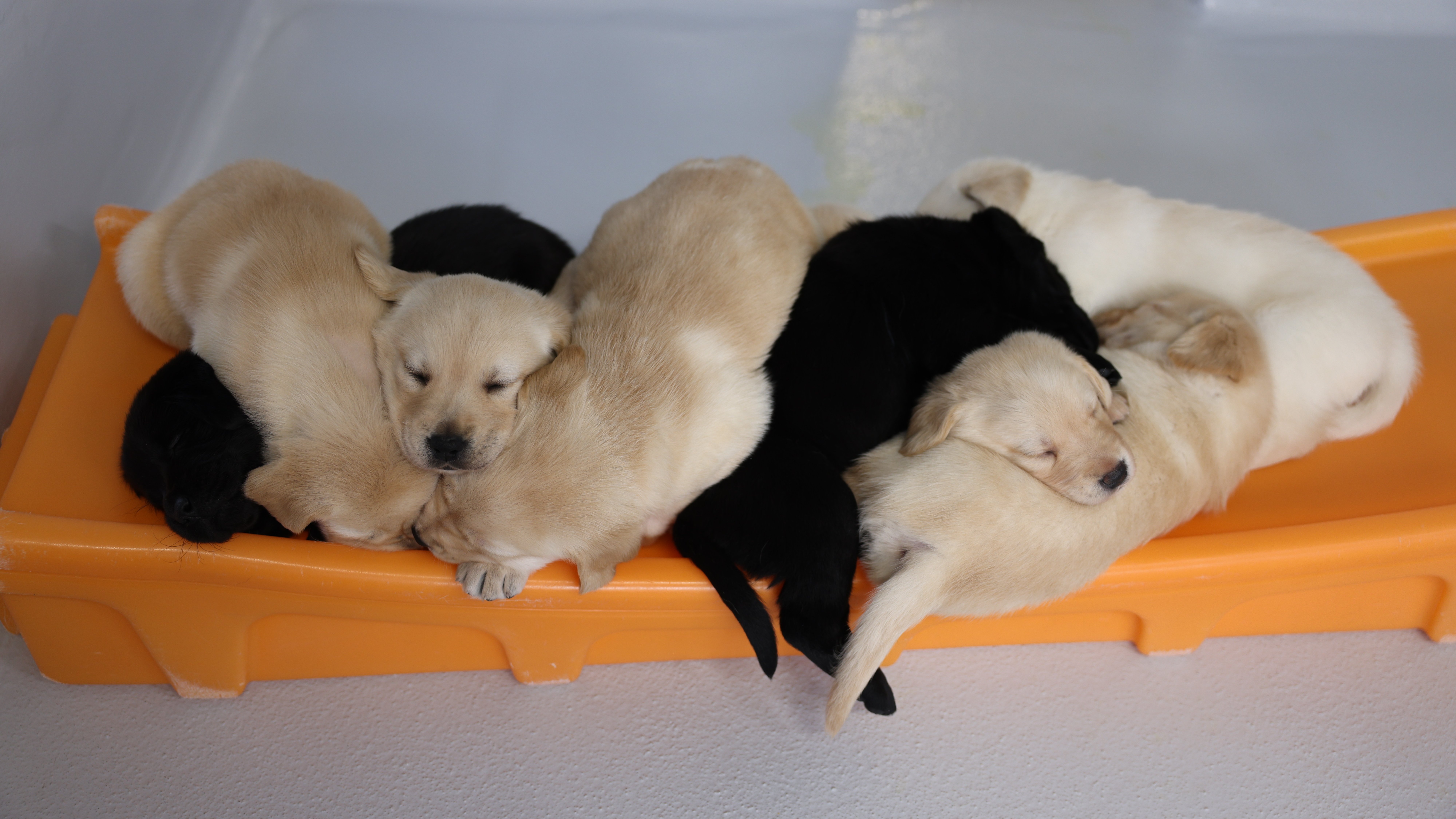
Your puppy will come home at about 8 weeks old and the fun begins! These first few weeks will be a blur of cuteness amid middle-of-the-night jaunts to “get busy” so take lots of photos - they grow so quickly!

02

Puppy Kindergarten

Every week, you’ll meet with your area leader or a trainer from Canine Development to work through a carefully-crafted curriculum that will lead you & your puppy step-by-step through basic obedience for a GDA|TLC service puppy-in-training.

03

Post Puppy K Assessment

4-6 weeks after your puppy graduates from Puppy K, you’ll meet with your CD trainer again to evaluate how your puppy is progressing and to get specialized goals for your puppy’s specific needs.

04

Socialization and Skills Practice

You and your puppy will take a few months to practice the skills you learned in Puppy K - taking your show on the road! You’ll carefully expand your puppy’s world, exposing them to a wider variety of environments & people.

05

Outside Obedience

You will enroll your puppy in an outside obedience class, giving your puppy the opportunity to hone their skills around unfamiliar dogs.

06

Kennel Stays

Once your puppy reaches 6 months old, they can board at our facilities in Sylmar, CA. Your puppy should begin with a day stay or 1-2 overnights before an extended stay.

07

9-Month Evals

Around 9 months old, Canine Development will have you bring your puppy to campus for several days for behavioral evaluations. You’ll get a report letting you know what your puppy excelled at and areas that need improvement.

08

12- month Evaluations

When your puppy is around one year old, you will meet with your Canine Development team member at a location near you. This will be an opportunity for GDA/TLC to observe the puppy's progress from their 9-month evaluation and assist you with problem solving in real time.

09

Advanced Skills

The advanced Puppy K curriculum is not universal at this point but your area may offer the opportunity to work on more advanced skills with your puppy and we highly recommend you take advantage of it.

10

In For Training

At 16 to 18 months old, you and your puppy will be invited back to the GDA|TLC campus to celebrate the puppy beginning guide or service dog training, a 6-9+ month process. You’ll be kept updated on his/her progress and if they graduate, you’ll be invited to attend the graduation and meet your puppy’s new partner.

Meet Our team

Frequently asked questions

What are puppy raiser areas?

image

GDA/TLC has 13 area groups around Southern California. We also have a few small groups out of state. Based on your location and preference for scheduling, you can choose which group you would like to join.

It’s important to get to know your local group members, as they are the people who can assist when you need a puppy sitter or when you want to arrange a training outing, etc. Shared community is an important and enjoyable part of puppy raising. In fact, many raisers say that they continue to raise puppies due to the community they've developed!

Can my dog greet other dogs while on leash?

image

No. When out and about, we can't know for sure when other dogs are going to be friendly. What may seem like a harmless greeting can quickly turn into an unsafe situation. In addition, it is important that our puppies in training remain focused on the handler rather than on other dogs or animals.

When is the kennel open?

image

The kennel is open for pick-up and drop-off from 10 a.m. to 7 p.m., seven days a week. (Closed on holidays)

Why do we use a paw pads and where can I use it?

image

Paw Pad exercises reinforce the "heel" position, i.e. the puppy standing in a straight line with its shoulder level with the handler's leg.

It also introduces duration, i.e. holding the desired position. This can be "stand", "sit", "down", or "stay".

The Paw Pad helps teach the puppy impulse control and can quickly initiate the connection between dog and handler.

You can use the paw almost anywhere!  Remember: When using the paw pad, if the environment is too stimulating or overwhelming for your puppy, then you must get more distance so your puppy can be successful.

See all Frequently Asked Questions
image